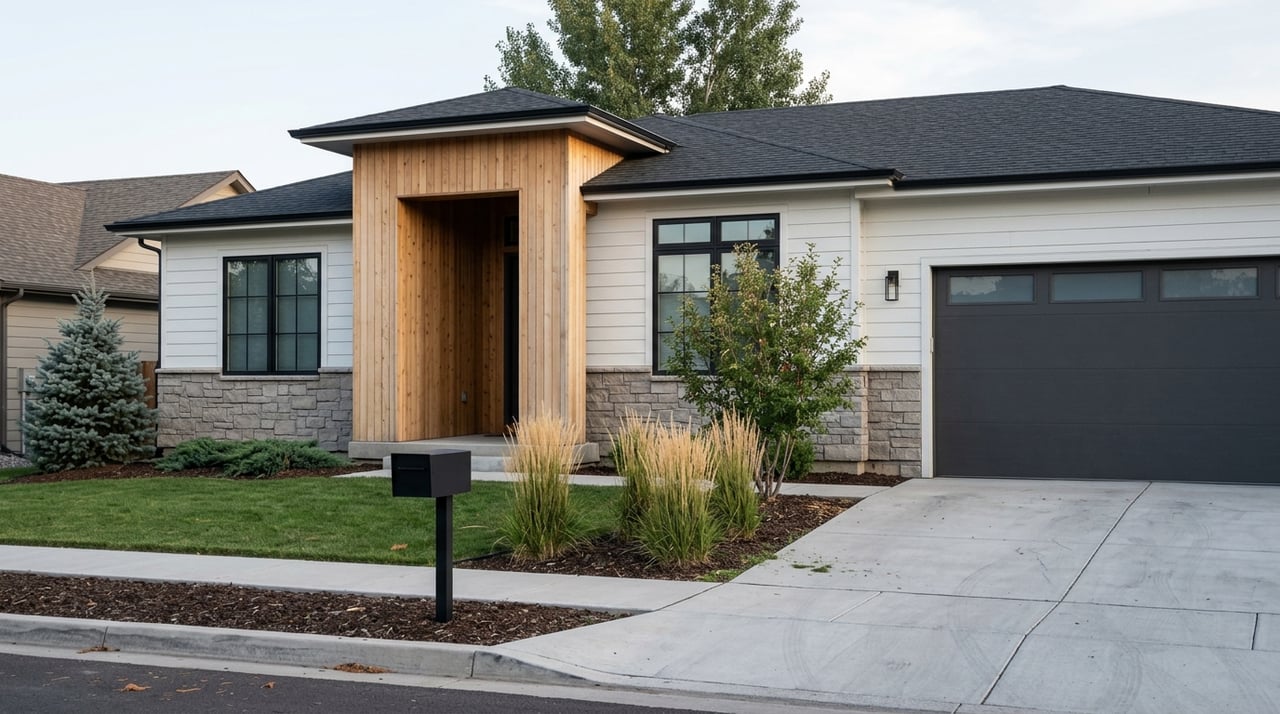
Understanding Newer Subdivisions In Southwest Billings
June 18, 2026
June 18, 2026
If you have been looking at homes in southwest Billings, you have probably noticed that “newer subdivision” can mean very different things from one street to the next. Some areas feel like established suburban neighborhoods with city services and nearby conveniences, while others sit closer to the edge with more open space and a lower-density feel. Understanding those differences can help you narrow your search, set better expectations, and choose a location that fits your day-to-day life. Let’s dive in.
The first thing to know is that southwest Billings is not one uniform neighborhood. The broader southwest corridor overlaps what the City treats as the West Billings or West End planning area, generally west of 24th Street, south of the Rims, and north of I-90.
That area has grown significantly over time. City planning materials note that since the original 2001 West Billings plan, the population in the area has more than doubled, with added neighborhoods, regional commercial areas, and major infrastructure.
For you as a buyer, that means newer subdivisions in southwest Billings often sit in a part of town that is still taking shape. One development may feel fully built-out and city-oriented, while another may still reflect the edge-of-town character that comes with more room and fewer nearby destinations.
Many buyers assume newer subdivisions follow one basic pattern: similar home styles, similar lot sizes, and a predictable neighborhood layout. In southwest Billings, the reality is more flexible.
Current West Billings planning materials describe several residential categories. Depending on the area, you may see single-family homes, duplexes, accessory dwelling units, townhomes, and in some appropriate locations, small multi-unit residential buildings.
That variety matters because it changes both the look and feel of a subdivision. Some neighborhoods are designed around more traditional suburban lots, while others are planned with a mix of housing types and a more compact layout.
A helpful way to understand newer subdivisions is to look at the density ranges used in local planning. In the West Billings plan, rural residential and agricultural areas are described as larger than one acre with a maximum of 1 unit per acre.
County neighborhood categories run roughly from 0.33 to 2.99 units per acre. Suburban residential areas run about 4 to 7 units per acre, while urban residential categories can go higher depending on the location.
In practical terms, that often creates a spectrum. On one end, you may find larger-lot fringe neighborhoods with more separation between homes. On the other, you may find tighter planned subdivisions closer to major roads and neighborhood commercial areas.
Older West Billings planning also anticipated that some land near the city could later re-subdivide into more urban-density lots once public services were extended. At the same time, certain edge areas were intended to keep one-acre-or-larger tract lots.
That planning history helps explain why the southwest corridor can feel mixed even within the same general area. You might tour one subdivision with compact lots and sidewalks, then drive a few minutes and see much larger parcels with a more semi-rural setting.
One of the biggest lifestyle questions in newer southwest subdivisions is how much driving your routine will involve. In most cases, the answer is still quite a bit.
West side transportation patterns are heavily shaped by peak-hour driving. City planning materials report major traffic counts at several intersections and note that some approaches at intersections like 56th Street West and Hesper Road, and Autumn Lane, Neibauer Road, and Shiloh Road, operated below the City’s preferred level of service threshold during peak periods.
For you, that means commute convenience is not just about distance on a map. It is also about which roads you use, when you travel, and how far out your subdivision sits.
The good news is that infrastructure is continuing to improve. A current City capital project includes completing Grand Avenue between 43rd Street West and 62nd Street West to arterial standard, with multimodal elements and a traffic signal at 56th Street West.
That kind of investment supports continued growth in the west end. It also reinforces the reality that southwest Billings functions like a suburban growth corridor where road access plays a big role in everyday convenience.
Public transit is available on the west side, but it usually serves as a supplement rather than the main way most households get around. The City lists Route 23 South Westend Circulator for the southwest side, with weekday service every 30 minutes from 8:00 a.m. to 5:30 p.m., then every 60 minutes later in the day.
The City also lists west-side routes including Route 5 Grand and Route 13 King Avenue West. For many buyers, that is useful to know, but most daily errands and commuting patterns in newer southwest subdivisions will still center on driving.
One reason many buyers are drawn to newer southwest Billings neighborhoods is access to modern infrastructure and growing west-side services. Still, proximity can vary quite a bit by subdivision.
Planning materials for West Billings say newer residential areas may have access to nearby community amenities such as parks, schools, and neighborhood commercial areas. They also call for development patterns that support walkability through sidewalks and shared-use pathways.
That is an important distinction. A subdivision may include planned neighborhood features and newer streetscapes, but your actual day-to-day convenience will depend on how close you are to those amenities.
For many buyers, school access is one of the biggest reasons to compare one subdivision against another. Billings Public Schools notes that its schools are spread across the city, including the West End, and Ben Steele Middle School says it opened on the west end in 2017 as Billings continued growing westward.
That does not make every subdivision equally convenient to every campus, but it does show that public infrastructure has expanded with growth. When you are comparing neighborhoods, it helps to look at the specific location of the home and the routes you would actually drive each day.
Medical services are also part of the west-side convenience picture. Billings Clinic West lists family medicine, pediatrics, and internal medicine at its Central Avenue location.
For buyers moving from another part of town or relocating from outside Billings, that can be a meaningful practical benefit. You may not need to head downtown for many routine care needs.
The appeal of newer southwest Billings subdivisions is easy to see. You can often find modern construction, newer infrastructure, a range of housing options, and access to growing west-side services.
At the same time, not every newer subdivision offers the same lifestyle. The farther out you go, the more likely it is that driving will shape your work commute, errands, and daily schedule.
A smart home search in this area usually comes down to matching the subdivision to your priorities. Think about how much yard space you want, how close you want to be to major roads and services, and whether you prefer a more compact neighborhood feel or a more edge-of-town setting.
If you are touring newer neighborhoods in southwest Billings, it helps to compare each one through the same lens:
That kind of side-by-side comparison can help you move beyond curb appeal alone. It also makes it easier to tell whether a home fits your lifestyle, not just your budget.
If you want help sorting through newer subdivisions in southwest Billings, the local details matter. The team at Live. Laugh. Montana. can help you compare neighborhoods, lot patterns, and daily-living tradeoffs so you can buy with more confidence.
Stay Up To Date on The Latest Real Estate Trends

Thrive at Home
Because summer is a great time to start

Thrive at Home
Smart prep now = more sunshine later

Sell
Tips for Buyers, Sellers, and Homeowners


Sell
3 Smart Ways to Keep Your Home Ready, So You Can Make Moves on Your Terms

Buy
3 Major Benefits of Homeownership That Go Beyond the Numbers
Buy
Approach Your 2026 Real Estate Decisions with Confidence

Live.Laugh.Empower
An intentional three-step approach to buying, selling, and thriving at home.
Live.Laugh.Montana. Real Estate Group is a “teamerage,” combining the strength of top-tier real estate agents with the independence of a brokerage. By bringing these areas together, we are elevating the client experience because we empower real estate agents to do what they do best without the traditional burdens and limitations of the real estate industry.
Join our community of enthusiastic subscribers and receive two emails per month packed with insights to help you live well, laugh often, and love Billings & Montana even more!
2725 Montana Ave Billings MT 59101