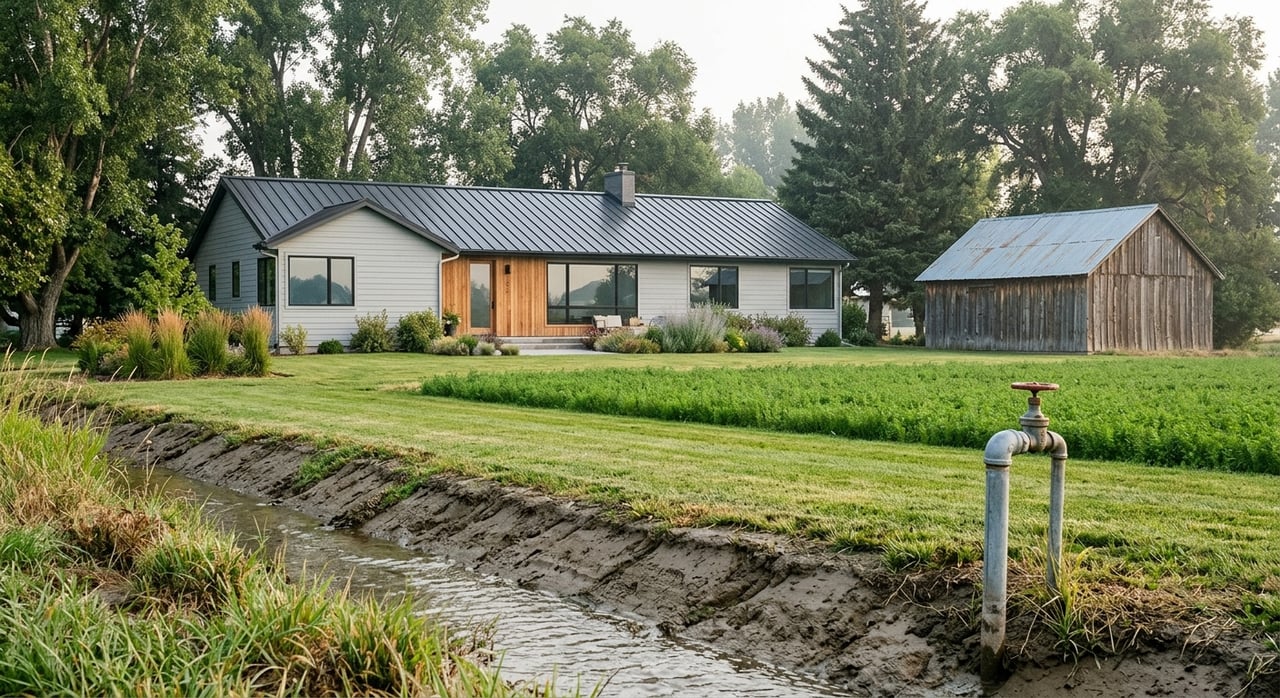
Small Acreage Living In Shepherd, Huntley And Worden
May 14, 2026
May 14, 2026
Dreaming of a little more elbow room without giving up access to Billings? Small acreage living in the Shepherd, Huntley, and Worden corridor can offer exactly that, but rural property here comes with details that matter. If you are considering a move to this part of Yellowstone County, understanding zoning, irrigation, access, and land use can help you buy with more confidence. Let’s dive in.
Shepherd, Huntley, and Worden sit east and northeast of Billings in southeast Yellowstone County. Shepherd is about 16 miles northeast of Billings, and Huntley is about 10 miles north, while Worden is part of the broader Huntley Project farming area. That gives you a rural setting with practical access to Billings, which Yellowstone County describes as the county’s major retail, financial, transportation, and medical center.
For many buyers, that balance is the appeal. You can enjoy open space, larger lots, and a more rural lifestyle while still being within reach of shopping, healthcare, and professional services in Billings. If you want room for a shop, pasture, equipment, or simply privacy, this corridor often lands on the short list.
In this part of Yellowstone County, “small acreage” is not one exact parcel size. County zoning categories show rural-residential land in ranges such as RR1 for 1 to 2.99 acres and RR3 for 3 to 9.9 acres, while Agriculture starts at 10 or more acres. In some Shepherd-area districts, there are also legacy agricultural tracts centered around 20-acre lots with single-family homes.
That means the market is really a mix. You may find 1-acre to 10-acre properties that feel residential but still have rural features, along with larger parcels tied to older agricultural patterns. Two homes with similar acreage can function very differently depending on zoning, irrigation setup, easements, and site conditions.
Before you fall in love with a property, it is smart to look closely at its zoning. A parcel in RR1 may have very different rules from one in RR3, Agriculture, or a special zoning district. That can affect what you can build, where you can place structures, and whether certain rural uses fit your plans.
Livestock rules are one example. Yellowstone County’s zoning update notes that livestock and fowl may be allowed on lots 2.5 net acres or less only when specific standards are met, including supplemental feeding requirements and setbacks for livestock structures. If your goal is to keep animals, add outbuildings, or create a true hobby-farm setup, zoning review should happen early.
One of the biggest differences between a rural acreage search here and a suburban home search is irrigation. The Huntley Project Irrigation District operates the irrigation system on the south side of the Yellowstone River between Huntley and Pompeys Pillar, and Huntley, Ballantine, Pompeys Pillar, and Worden are served with Huntley Project water. The area has a long agricultural history, with irrigation deliveries dating back to 1908.
If you buy irrigated ground, water management may become part of your regular routine. Yellowstone County’s long-range plan says irrigated acreage in the county is still dominated by flood irrigation, with pivot and sprinkler systems making up a much smaller share. In practical terms, that can mean ditches, headgates, seasonal water flow, and field leveling are not abstract concepts. They are ownership realities.
Not all acreage is equally usable. The Huntley Project Irrigation District lists water rights, encroachment permits, land splits, right-of-ways, and right-of-way access among its services. It also states that canal and lateral right-of-ways can be wide, and permanent structures like houses and trees may not be placed in those areas.
That can affect where you build, how you fence, and how much of the parcel feels truly usable. The district also notes that its operation and maintenance roads are not public access roads. So when you look at a property, it is worth asking whether the deeded acreage matches the practical, usable acreage after easements and setbacks are considered.
Water access can be one of the most important pieces of a small acreage purchase. Montana DNRC says new or expanded surface-water or groundwater uses after June 30, 1973 generally require a beneficial water use permit or groundwater notices. DNRC also says property owners should search for water rights appurtenant to the land they own.
This is especially important because not every water arrangement works the same way. Some rights may be tied to the land, while others may relate to an irrigation district system. If water matters to how you plan to use the property, this is a due diligence item you do not want to leave until the last minute.
Acreage alone does not tell you whether a property will work for your goals. Yellowstone County’s soil survey summary describes terrain that ranges from gently sloping to very steep, with valley terraces and flood plains often carrying deep loams to silty clays, while upland areas may be shallower and steeper. That means drainage, driveway performance, pasture use, and homesite selection can vary a lot from one parcel to the next.
In real life, this affects both convenience and cost. A parcel may look perfect on paper, but if the access road is tricky in wet weather or the ideal building site has drainage challenges, your plans may need to shift. Rural property is always more site-specific than it first appears.
If a parcel is near the Yellowstone River, a drainage, or an irrigation ditch, floodplain review should be part of your process. Yellowstone County’s floodplain office says floodplain regulations apply to all lands in the county and notes that FEMA electronic flood maps may not be totally accurate near a boundary. That is a good reminder to verify rather than assume.
For buyers in this corridor, floodplain status can affect usable land, future building options, and overall risk. Even when a listing sounds straightforward, the map details still matter. A quick check early in the process can save time and help you avoid surprises.
Rural living is about more than the house and land. It is also about the day-to-day details that shape how the property functions for you over time. In the Shepherd, Huntley, and Worden corridor, that includes school district boundaries, winter road maintenance, and your most common route to Billings.
Huntley Project School District is based in Worden and includes elementary, junior high, and high school. Shepherd School District is based in Shepherd and includes elementary, middle, and high school. Yellowstone County also provides school mapping tools and separate snowplow maps for the Huntley-Worden area and the Shepherd area, which is helpful because winter access can vary by road segment and maintenance priority.
Commute conditions may also shift over time. MDT has Huntley Area Projects planned on Highway 312 near Shepherd Road, with phase 1 anticipated for 2027 and phase 2 for 2028. If your schedule depends on a daily drive, that is worth keeping on your radar.
When you tour or evaluate a property in this corridor, keep your questions practical and parcel-specific. A few details can change how a property lives and whether it truly fits your plans.
Small acreage purchases usually involve more moving parts than an in-town home search. You are not just evaluating square footage and finishes. You are also weighing land use, water, access, mapping, and long-term function.
That is where local experience matters. When you work with a team that understands Yellowstone County’s rural and acreage properties, you can ask better questions earlier and move forward with clearer expectations. That kind of preparation can make the process smoother whether you are buying your first rural home or looking for a lifestyle property with more room to grow.
If you are exploring small acreage living in Shepherd, Huntley, or Worden, Live. Laugh. Montana. can help you compare properties, evaluate the details that matter, and find a rural home that fits the way you want to live.
Stay Up To Date on The Latest Real Estate Trends
Thrive at Home
Smart prep now = more sunshine later

Sell
Tips for Buyers, Sellers, and Homeowners


Sell
3 Smart Ways to Keep Your Home Ready, So You Can Make Moves on Your Terms

Buy
3 Major Benefits of Homeownership That Go Beyond the Numbers

Buy
Approach Your 2026 Real Estate Decisions with Confidence

Live.Laugh.Empower
An intentional three-step approach to buying, selling, and thriving at home.

Live.Laugh.Local.
How Choosing Local Benefits You and Your Community
Live.Laugh.Montana. Real Estate Group is a “teamerage,” combining the strength of top-tier real estate agents with the independence of a brokerage. By bringing these areas together, we are elevating the client experience because we empower real estate agents to do what they do best without the traditional burdens and limitations of the real estate industry.
Join our community of enthusiastic subscribers and receive two emails per month packed with insights to help you live well, laugh often, and love Billings & Montana even more!
2725 Montana Ave Billings MT 59101